Don’t Be That Person

Learn how to properly display your First Light flag

There are explicit display orientation rules to follow when you’re ready to show off your Syracuse city flag. Whether it’s flying on a flagpole or mounted on a wall, the presentation of the flag is important.

On a Flagpole

Horizontal Orientation
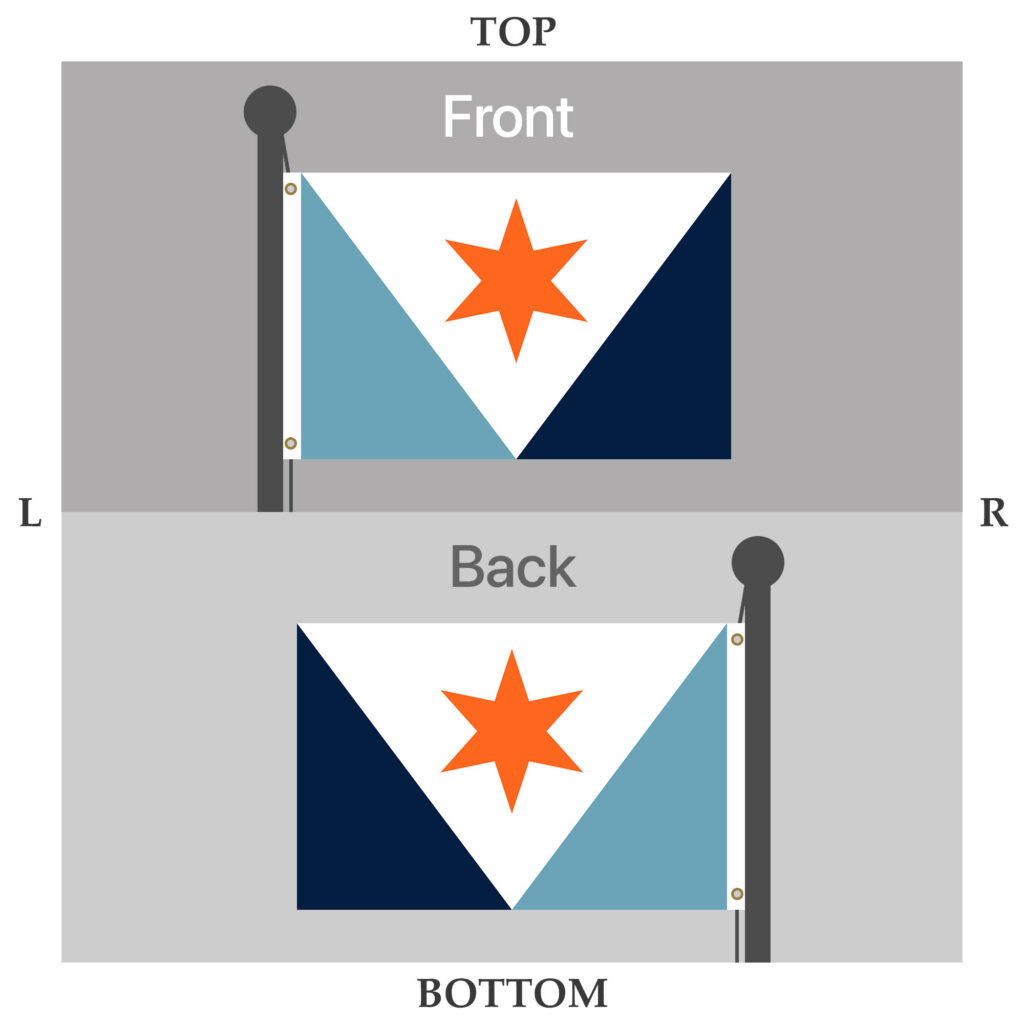
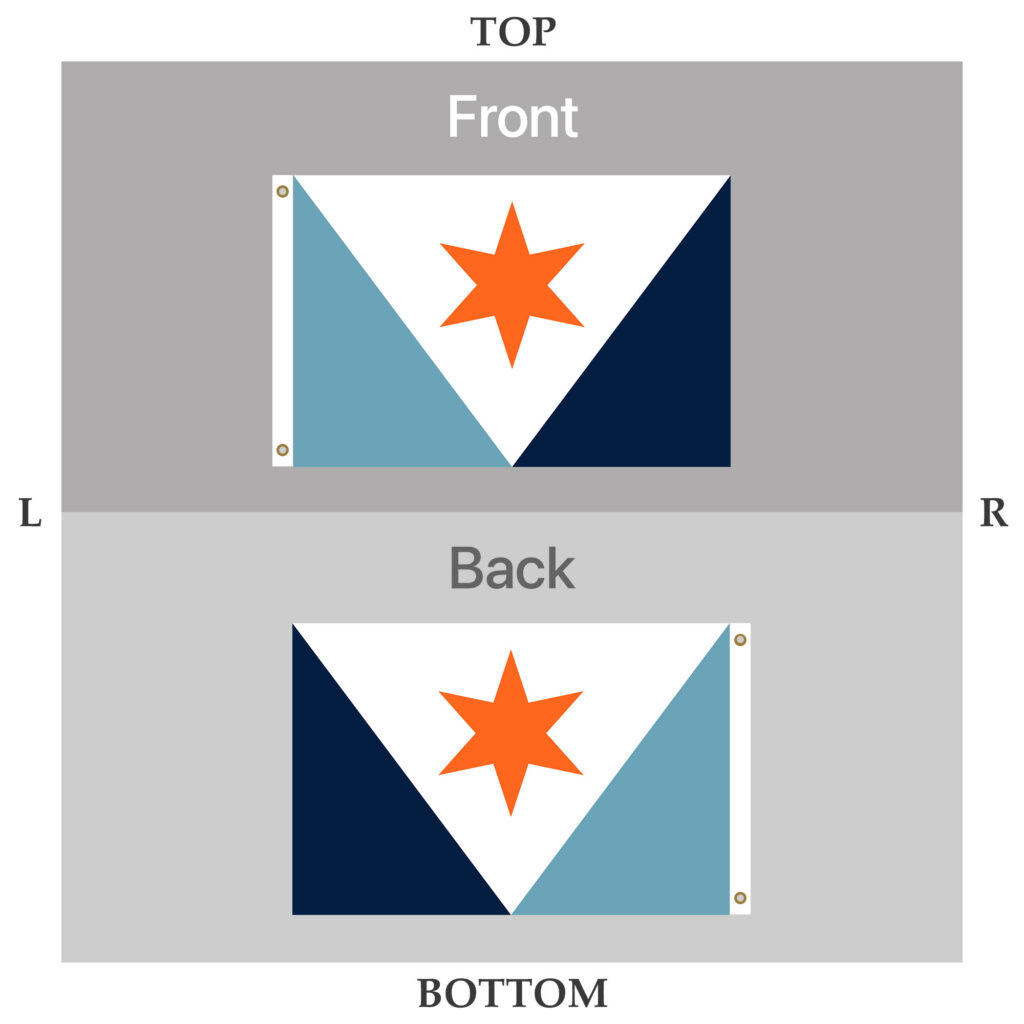
Display diagram showing the Syracuse city flag flown horizontally on a flagpole

When flown on a flagpole horizontally the flag must be affixed to the halyard via the azure-blue hoist side of the flag. It must be affixed to the halyard in such an orientation that the star rests in the uppermost segment. The angles opposite of the vertical legs of both right triangles must meet in the bottommost segment.

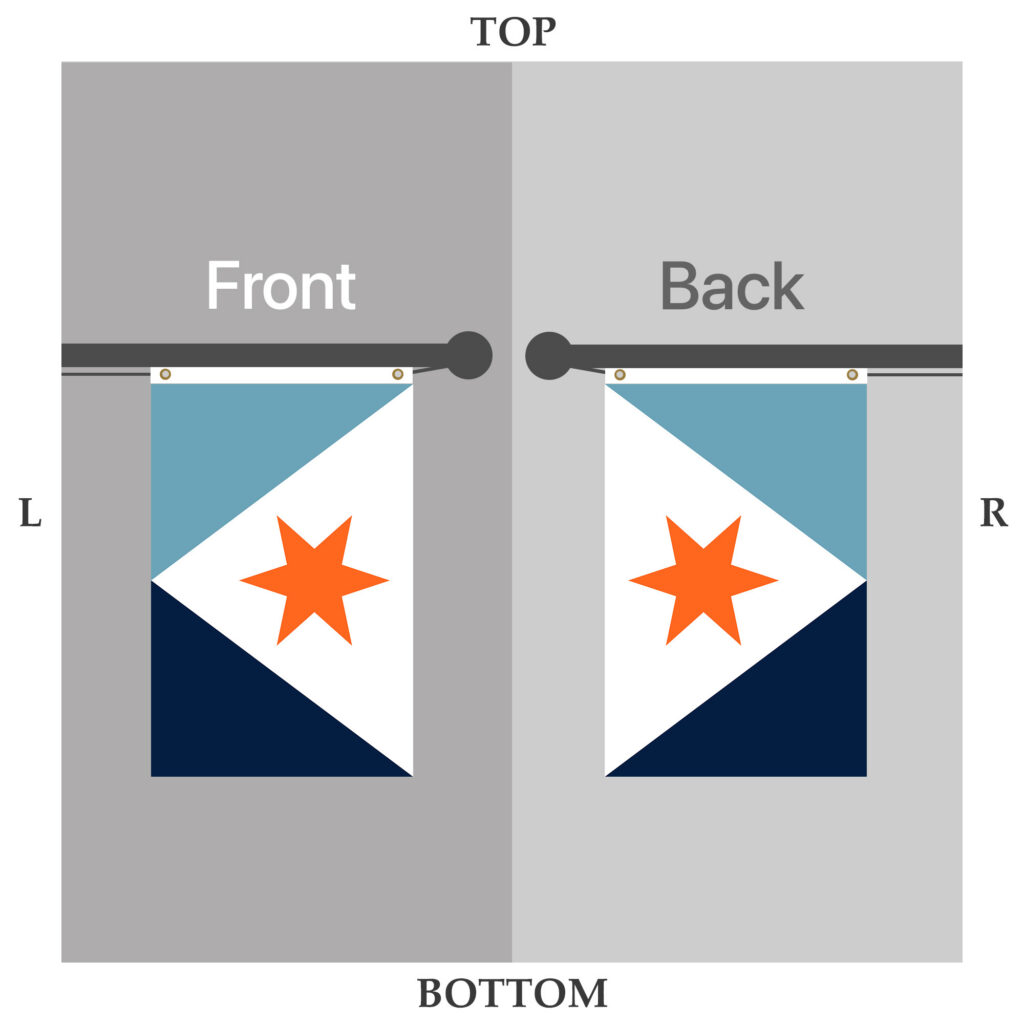
Display diagram showing the Syracuse city flag flown vertically on a flagpole

When flown on a flagpole vertically the flag must be displayed in such an orientation that the star rests in the rightmost segment. The azure blue triangle must rest in the uppermost segment. The navy blue triangle must rest in the bottommost segment. The converging points of the right triangles must meet in the leftmost segment.

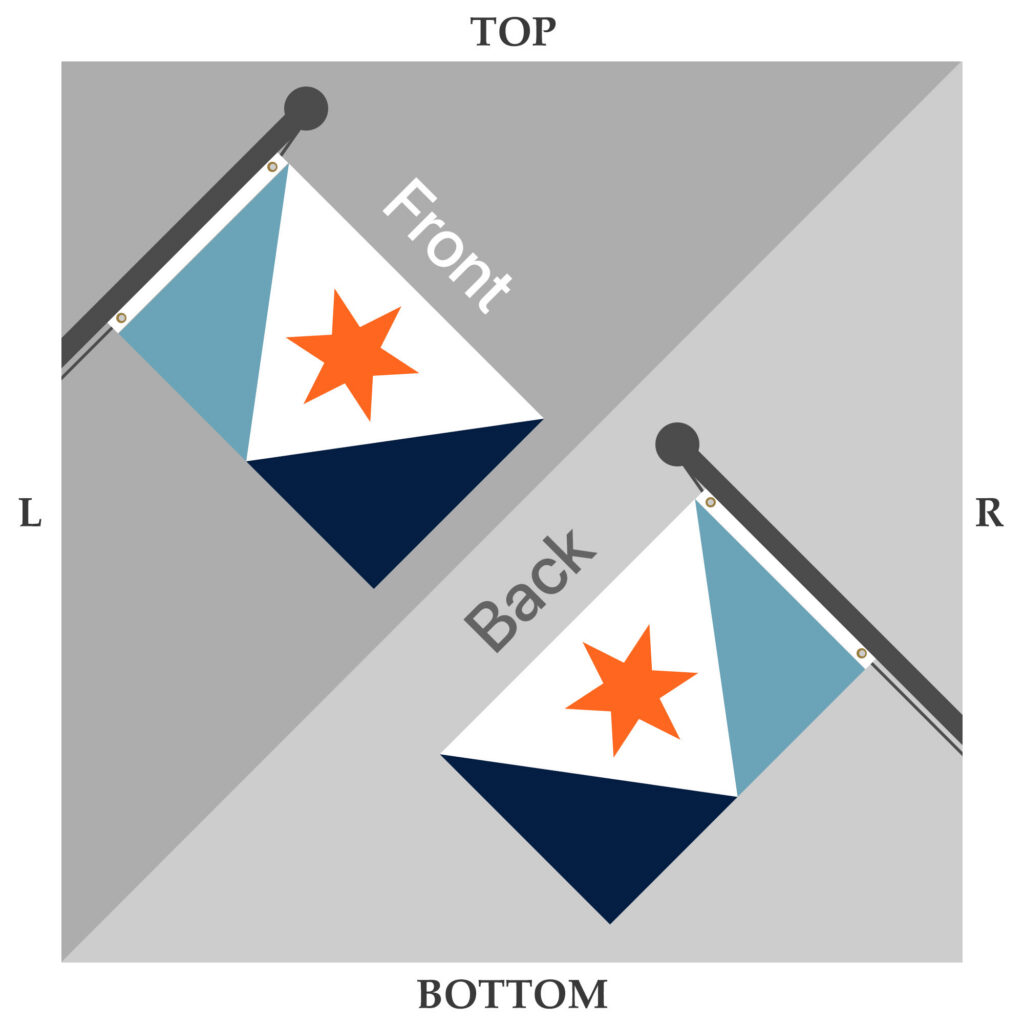
Display diagram showing the Syracuse city flag flown at an angle on an outrigger flagpole

When flown at an angle on an outrigger flagpole the flag must be affixed to the halyard via the azure-blue hoist side of the flag. It must be affixed to the halyard in such an orientation that the star rests in the uppermost segment. The angles opposite of the vertical legs of both right triangles must meet in the bottommost segment.

Mounted on a flat surface

Horizontal Orientation
Display diagram showing the Syracuse city flag hung horizontally on a flat surface

When mounted horizontally the flag must be displayed following the same orientation rules as when it is flown on a flagpole horizontally.

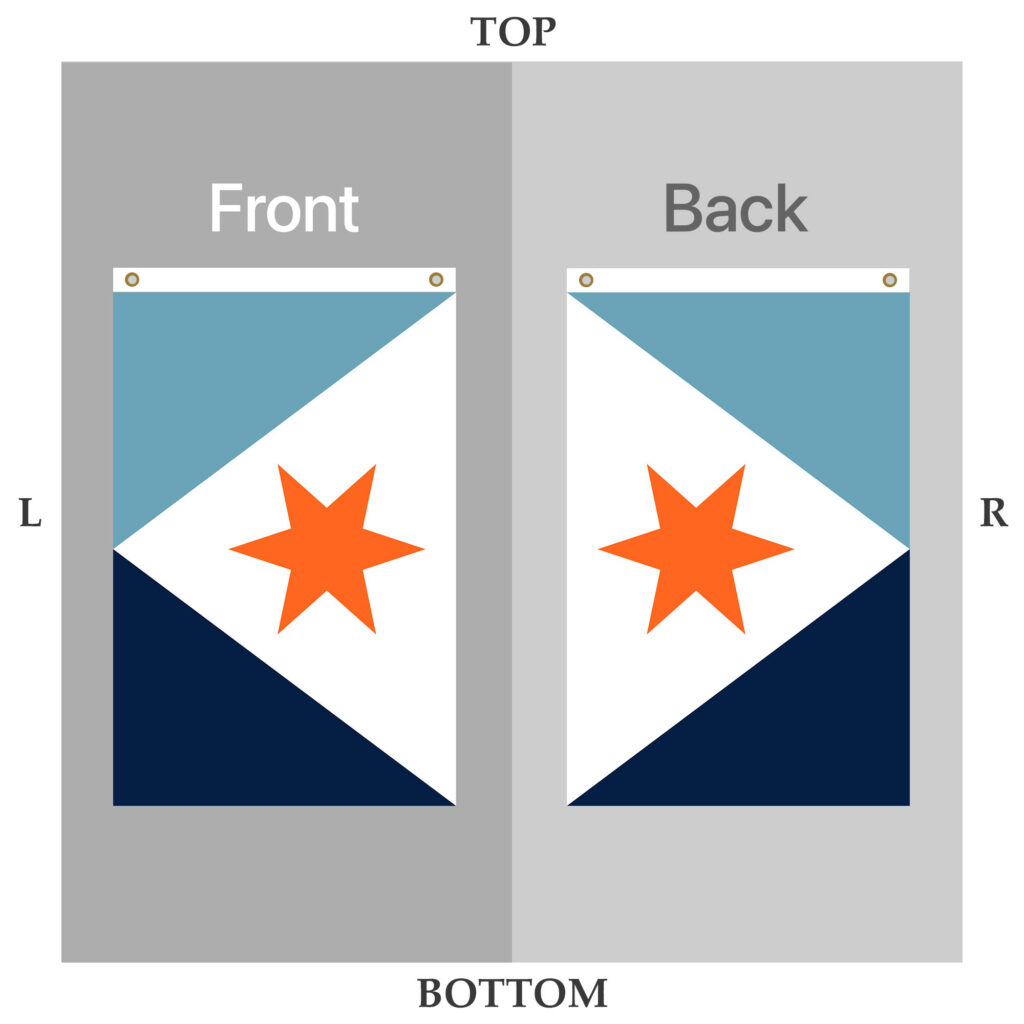
Display diagram showing the Syracuse city flag hung vertically on a flat surface

When mounted vertically the flag must be displayed following the same orientation rules as when it is flown on a flagpole vertically.

Hierarchy Rules

Alongside the U.S. flag on separate flag poles
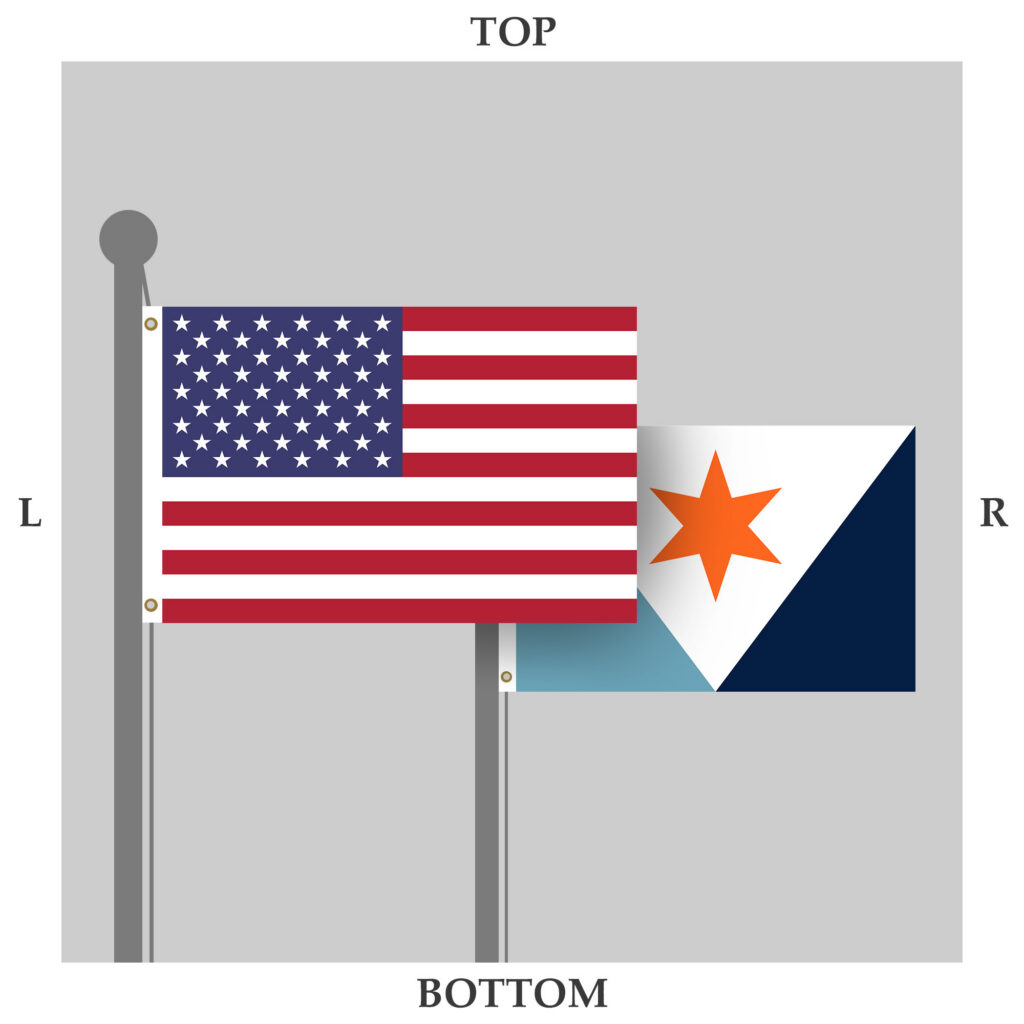
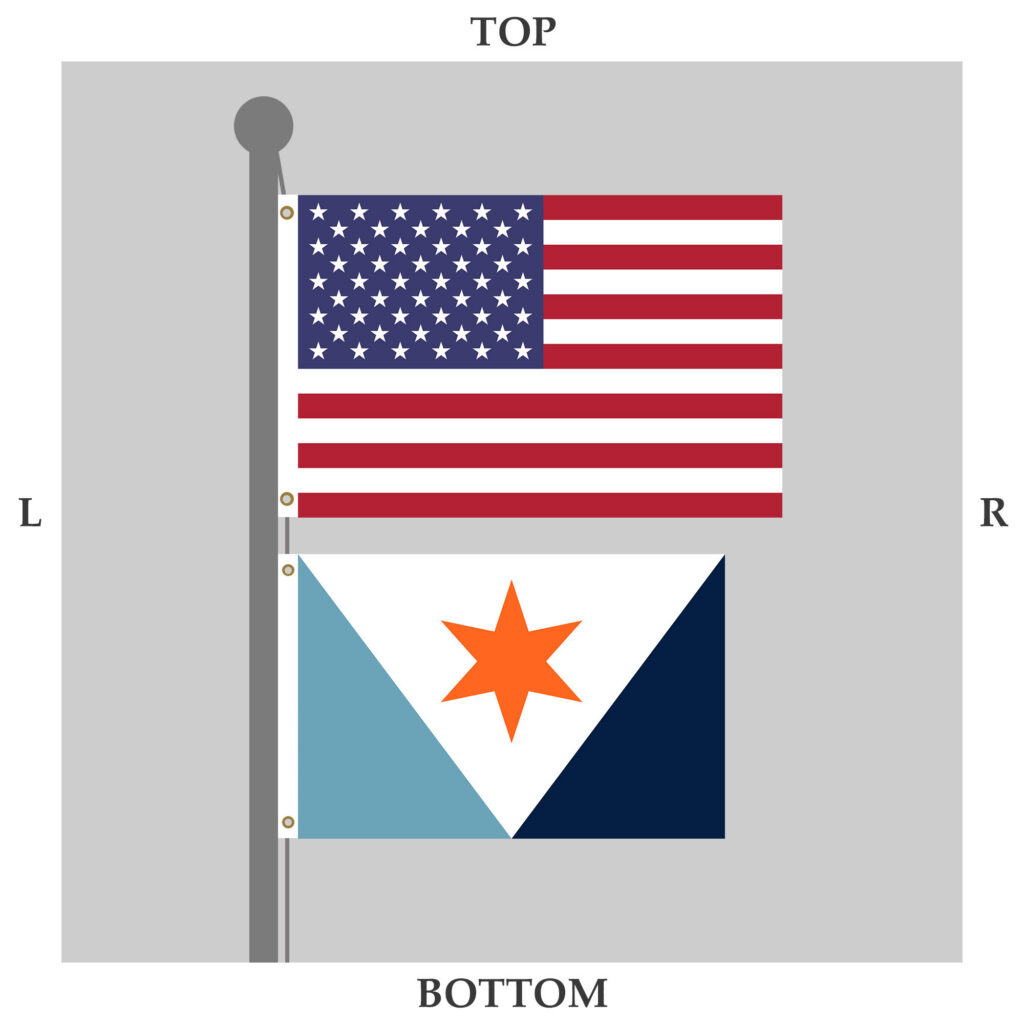
Display diagram showing the U.S. flag and Syracuse city flag on separate flagpoles

The U.S. flag always flies furthest to the observer’s left. All other flags, the Syracuse city flag included, must be flown furthest to the observer’s right. All non-national flags must be hoisted at a lower height in relation to the U.S. flag.

Display diagram showing the U.S. flag flown above the Syracuse city flag on the same flagpole

The U.S. flag always flies at the top-most position of a flag pole. All other flags, both national and non-national, the Syracuse city flag included, must be hoisted below it.

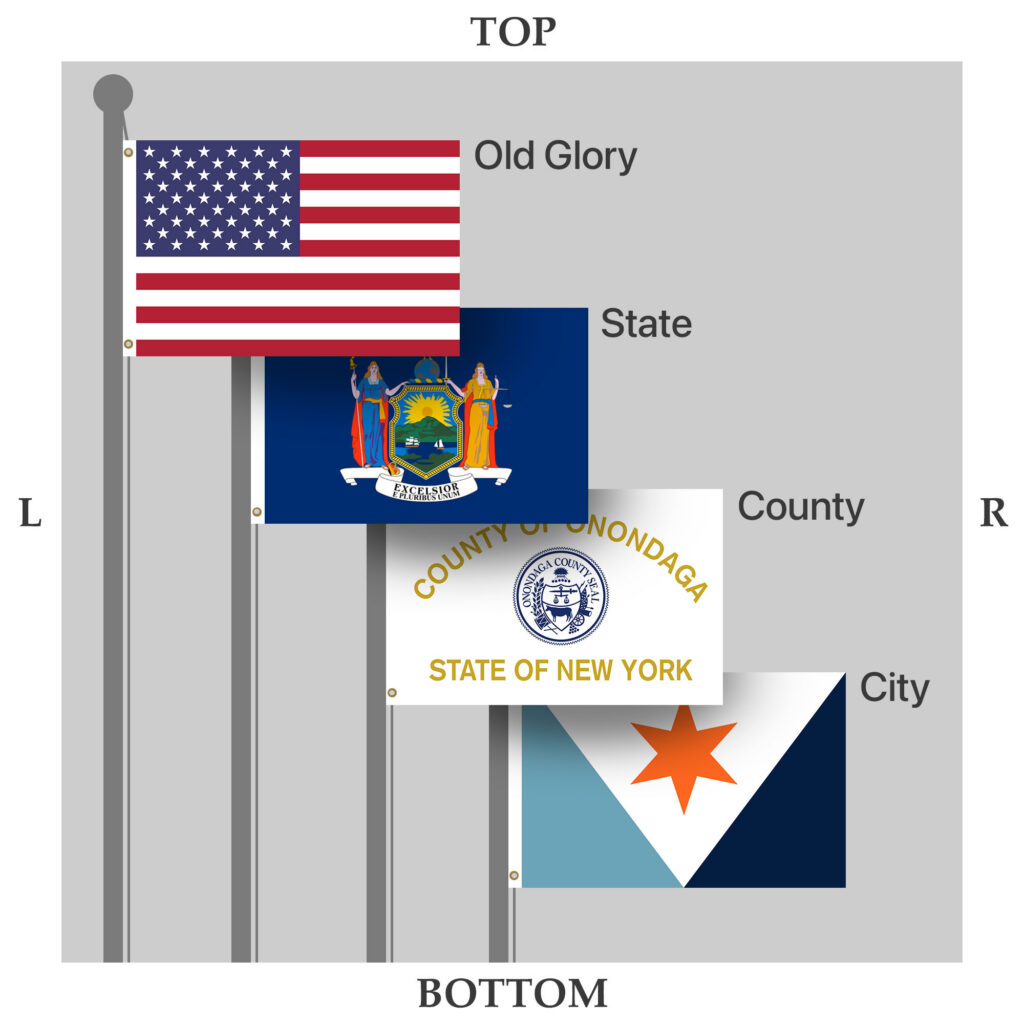
Display diagram showing the U.S. flag, New York State flag, Onondaga County flag, and Syracuse city flags on four separate flagpoles

The U.S. flag always flies furthest to the observer’s left. To the right of the U.S. flag will fly all other non-national flags in the following order from left to right: state flags, county flags, then city flags. All non-national flags must be hoisted at a lower height in relation to the U.S. flag.

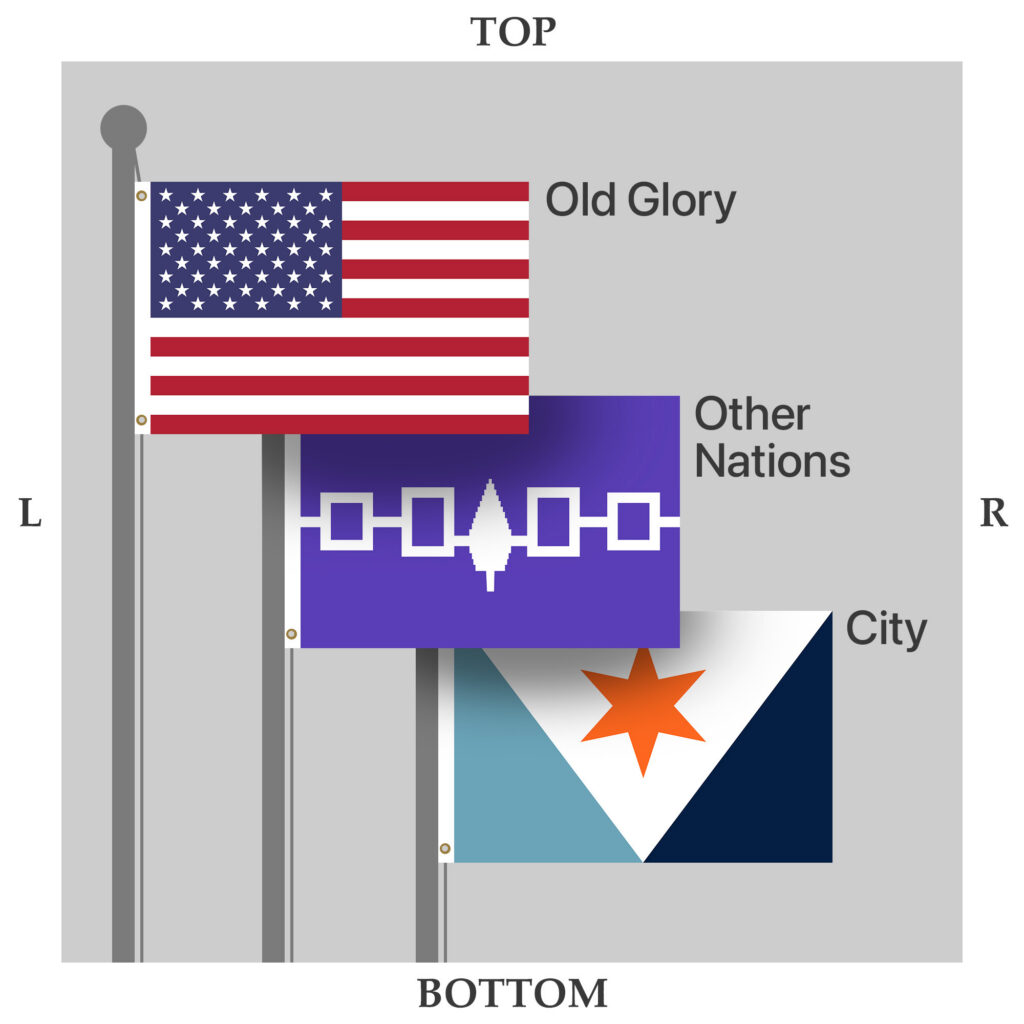
Display diagram showing the U.S. flag, a Haudenosaunee nations flag, and the Syracuse city flag on three separate flagpoles

The U.S. flag always flies furthest to the observer’s left. To the right of the U.S. flag will fly nation flags. Finally, municipal flags like the Syracuse city flag will fly furthest to the observer’s right. National flags may be hoisted at the same height as the U.S. flag. All non-national flags must be hoisted at a lower height.